
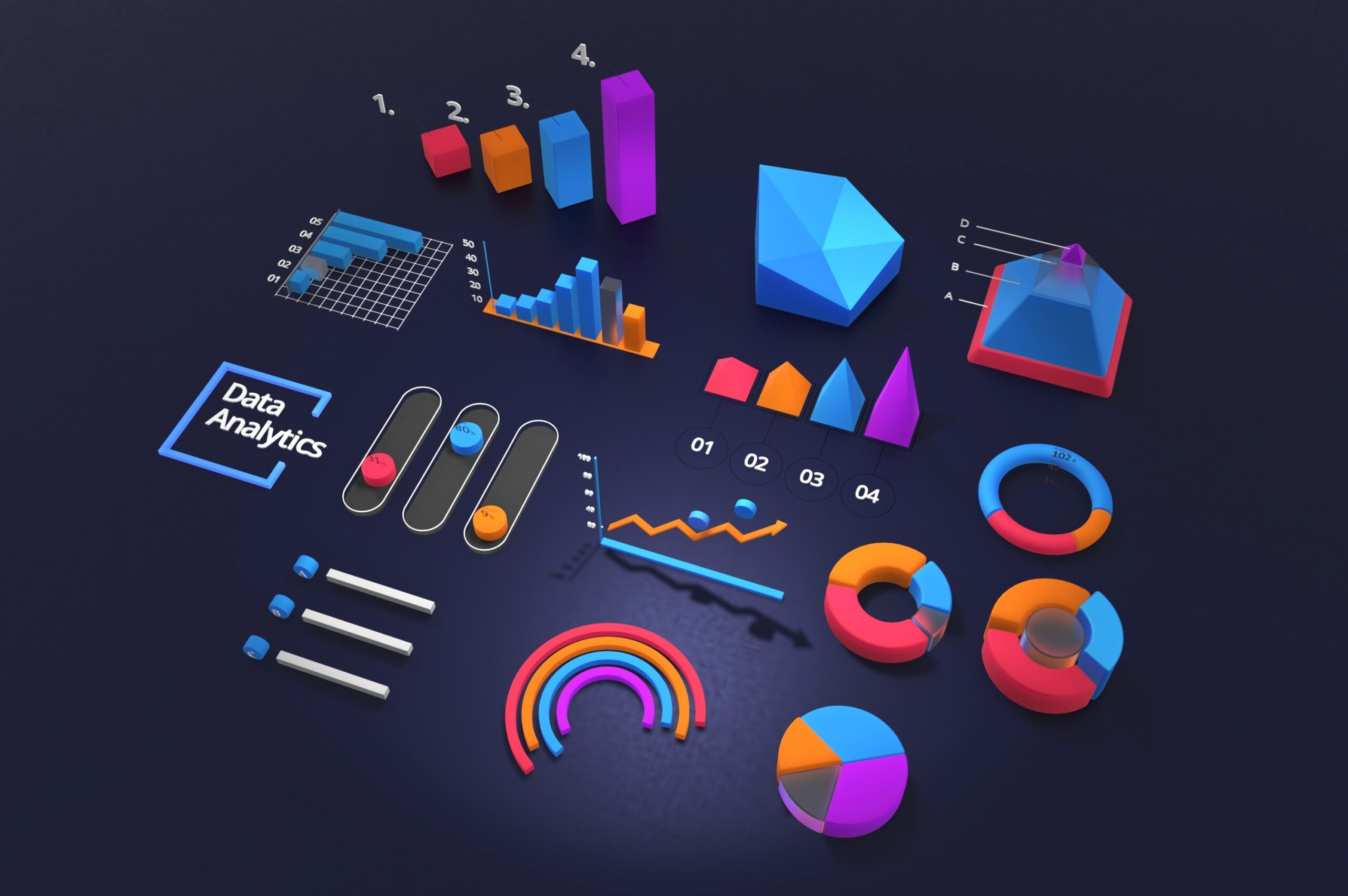
Leveraging advanced models and algorithms, predictive analytics empowers organizations to forecast future trends, make data-driven decisions, and gain a competitive edge.
1. Linear Regression: Predicting Trends
Linear regression, a foundational predictive model, is widely used for trend analysis and forecasting. It works by establishing a linear relationship between a dependent variable and one or more independent variables. This model is particularly useful when you want to predict a continuous outcome, such as sales revenue, based on historical data and variables like advertising spend, time, or customer demographics. Linear regression is a valuable tool for understanding how changes in one variable can impact another, allowing businesses to make informed decisions and optimize strategies.
2. Decision Trees: Making Informed Choices
Decision trees are versatile predictive models known for their ability to handle both classification and regression tasks. These models resemble a flowchart, with each node representing a decision or test on a specific attribute. Decision trees are used in various applications, including customer segmentation, fraud detection, and medical diagnosis. They provide a transparent and interpretable way to make decisions, making them valuable for businesses seeking insights into complex data.
3. Random Forest: Harnessing Collective Intelligence
Random Forest is an ensemble learning technique that combines multiple decision trees to create a robust predictive model. It excels in handling high-dimensional data and mitigating overfitting, a common issue in predictive modeling. Random Forest is used in applications such as credit scoring, recommendation systems, and anomaly detection. Its strength lies in harnessing the collective intelligence of multiple decision trees, resulting in more accurate and stable predictions.
4. Neural Networks: Mimicking Human Brain
Neural networks, inspired by the human brain’s structure and functioning, have gained prominence in predictive analytics. They are particularly adept at handling complex, unstructured data, such as images and text. Neural networks are used in image recognition, natural language processing, and sentiment analysis. Their deep learning capabilities enable them to extract intricate patterns and insights from vast datasets, making them a vital tool in modern predictive analytics.
5. Support Vector Machines: Maximizing Margin
Support Vector Machines (SVM) are powerful algorithms used for classification and regression tasks. SVMs aim to find the hyperplane that maximizes the margin between different classes in a dataset. They are widely employed in applications like text classification, image recognition, and fraud detection. SVMs excel in scenarios where data is not linearly separable, as they can map data to higher dimensions to achieve separation, providing robust and accurate predictions.
Conclusion: Embracing Predictive Analytics for Success
Predictive analytics models and algorithms have become indispensable tools for businesses seeking to gain a competitive edge. Whether you are forecasting trends, making informed decisions, or uncovering hidden insights, these models offer a wide range of applications. Embracing predictive analytics is not just a trend; it’s a strategic imperative for organizations looking to navigate the complexities of today’s data-driven world successfully. By harnessing the power of these top predictive analytics models and algorithms, businesses can unlock valuable insights and shape a brighter future.
Do we need one to determine if you’ve got a project in mind 🙂 !?


